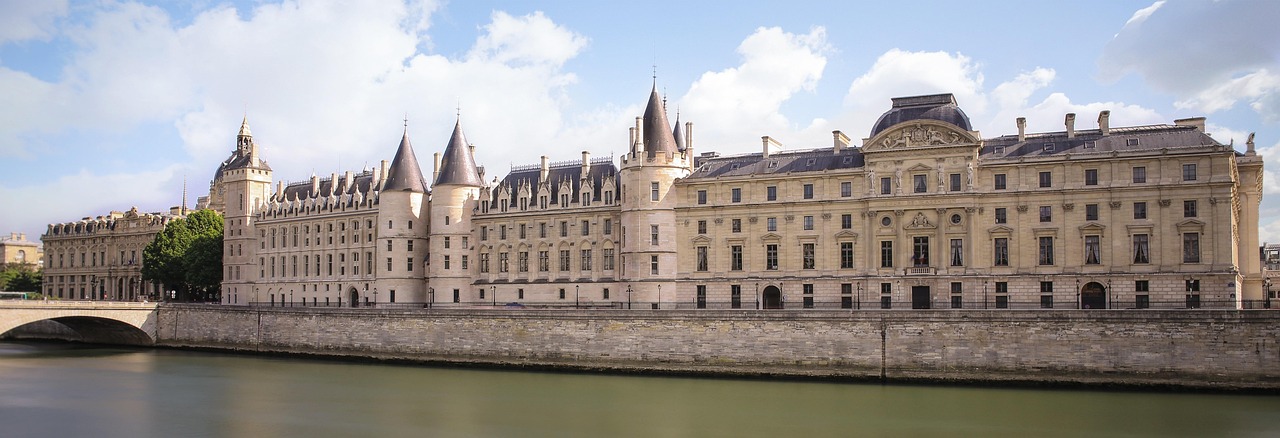
Conciergerie
Kings built it, the Revolution filled it
⏱ 1-1.5 hours👤 All ages$$
Get Tickets
Get Conciergerie Tickets
Skip the line · mobile tickets accepted at the door
The palace's first life frames the second: the Capetian kings ruled from this island fortress (Sainte-Chapelle was its royal chapel; the great hall hosted Europe's grandest court), Charles V decamped after the 1358 uprising — leaving the palace to the law courts and its concierge (hence the name) — and the building ran as courthouse-and-prison for six centuries: the Revolution merely inherited the machinery and accelerated it. The Terror's 14 months here (the Revolutionary Tribunal sat upstairs in the Grand Chambre) processed the era's whole cast: Marie-Antoinette (October 1793, the trial's two days, the cart to the Place de la Révolution), Charlotte Corday, the Girondins' last banquet, Danton ("show my head to the people"), Lavoisier the chemist, and finally Robespierre himself — wounded, laid in the tribunal's antechamber, gone by evening: the building consumed the Revolution that filled it.
The queen's memory shapes the visit: the Restoration converted her cell into the expiatory chapel (the silver-tears decor, the marble marking where her bed stood), the adjacent reconstruction stages the cell as the trial records describe it — the screen, the gendarme, the widow's black — and the women's courtyard outside her window still holds its fountain and the grief of the place. The memorial room's lists restore proportion: the Terror's Conciergerie dead ran from aristocrats to laundresses, and the wall of names reads like the Revolution auditing itself.
Practicals and fit: 2 Boulevard du Palais on the Île de la Cité (Métro Cité at the door; the law courts still operate in the complex — security lines accordingly), 60-90 minutes with the HistoPad, the Sainte-Chapelle pairing mandatory (two minutes apart; combined ticketing common), and the island circuit around it. Fit: history and Revolution readers first, Gothic-architecture lovers (the great hall alone justifies entry), couples on the island walk — and anyone who stood in Sainte-Chapelle's light and wants the palace's darker half.
What to Expect
Format
The medieval palace turned Terror prison — Europe's grandest Gothic hall downstairs, Marie-Antoinette's cell and the memorial of names upstairs — resurrected room by room on the included HistoPad.
Best Time
Mornings before the law-court security lines build; pair with Sainte-Chapelle next door in the same palace complex.
Duration
Sixty to ninety minutes inside.
Tips
Take the HistoPad — it earns its keep here more than anywhere, restoring the halls in place. The corner tower outside carries the oldest public clock in Paris, ticking since 1371. Sainte-Chapelle is two minutes away; do both.
⚡ Quick Picks
Best For
Revolution readers — this is the primary site, from the queen's cell to Robespierre's last hours.
Families
The HistoPad turns the empty halls into the full medieval and revolutionary stage.
Couples
The island's Gothic circuit — great hall, chapel glass next door, the Pont Neuf prow after.
Pair With
Sainte-Chapelle in the same complex; Notre-Dame and the flower market finish the island.
Time Needed
One island morning, chapel included.
Ready to book Conciergerie?
Get Tickets →Frequently Asked Questions
What happened to Marie-Antoinette here?
Her last two months — the widowed queen held under constant watch, the carnation escape plot, the two-day trial upstairs — ending with the cart to the guillotine in October 1793; her cell site is now the memorial chapel.
What is the great hall?
The Salle des Gens d'Armes — Europe's largest surviving Gothic hall, built in the 1300s to feed a royal household of 2,000 — four ranks of columns running into torch-lit distance.
Is it worth it with Sainte-Chapelle?
They are two halves of the same royal palace — the chapel its glory, the Conciergerie its gravity — two minutes apart with combined tickets common. Do both in one island morning.
What is the HistoPad?
The included augmented-reality tablet that resurrects the rooms in place — the medieval halls in color, the prison's partitions restored — and it earns its keep here more than at any monument in Paris.
Did the revolutionaries end up here too?
Danton, Robespierre and the Terror's own architects followed their victims through the same gates — the memorial room's wall of nearly 3,000 names reads like the Revolution auditing itself.
More Paris Attractions
Browse all →
Sainte-Chapelle
A 13th-century Gothic jewel on the Île de la Cité — its upper chapel a breathtaking cage of stained glass, with 15 soaring windows of biblical scenes that bathe the interior in colored light. One of the most beautiful spaces in Paris.

Notre-Dame Cathedral
The Gothic masterpiece on the Île de la Cité, reopened in December 2024 after the 2019 fire — soaring nave, rose windows, and gargoyles at the very heart of Paris. Free to enter; the towers climb is separately ticketed.

Palace of Versailles
Louis XIV's staggering royal palace just outside Paris — the dazzling Hall of Mirrors, opulent state apartments, and vast formal gardens with fountains, the Grand Trianon, and Marie Antoinette's estate. A day-trip essential.